Thursday, July 2, 2015

Seventh Graders and Sexism

Being that I am a 7th grade
teacher I thought that reading Seventh Graders and Sexism by Lisa
Espinosa would be a fitting idea. As I was reading, I was realizing that her struggles
with her students are the same that I experience daily. The idea that not only
do they struggle with gender roles here in the United States but the gender
roles that they experience within their own cultures are sometimes far
different. Boys everywhere are expected to grow up and be heads of households,
be the moneymakers, and in some cultures they are the only “educated ones”.
Girls on the other hand are taught to cook, clean, take care of the home and in
some cultures they are to obey the man in their life (either a father or
husband). While reading her article I felt that she and I are at a complete
disadvantage. How are we supposed to teach them about sexism and about gender equality
when their cultures are telling them otherwise?

One piece that struck home with me was when
she discussed about why 7th graders should learn about sexism. I
have been teaching 10 years, and I have experienced many situations that were
good and some were horrendous. This year I had 2 girls accuse 2 boys of inappropriately
touching them. Sadly both cases turned out that the girl was lying and each
incident had its own story. However, Lisa Espinosa also experienced this and it
made me fell like I wasn’t doing wrong by my kids, that someone else was
“feeling it too”.

After hearing Tina talk about her lesson
and reading this article I have begun the framework to incorporating the topic
of gender and sexism in my curriculum. I
plan on finding children’s books, articles and a novel (hopefully) to help
drive the topic home. I will then have them do some type of persuasive piece. I
know that this topic may ruffle some feathers, but it’s like the giant elephant
in the room that no one wants to address. I’m grateful that I have the freedom
to teach topics that will impact the students at Woonsocket Middle.
Wednesday, July 1, 2015
Like I said...
 1st bed with Sophia and her "Princess Babies"
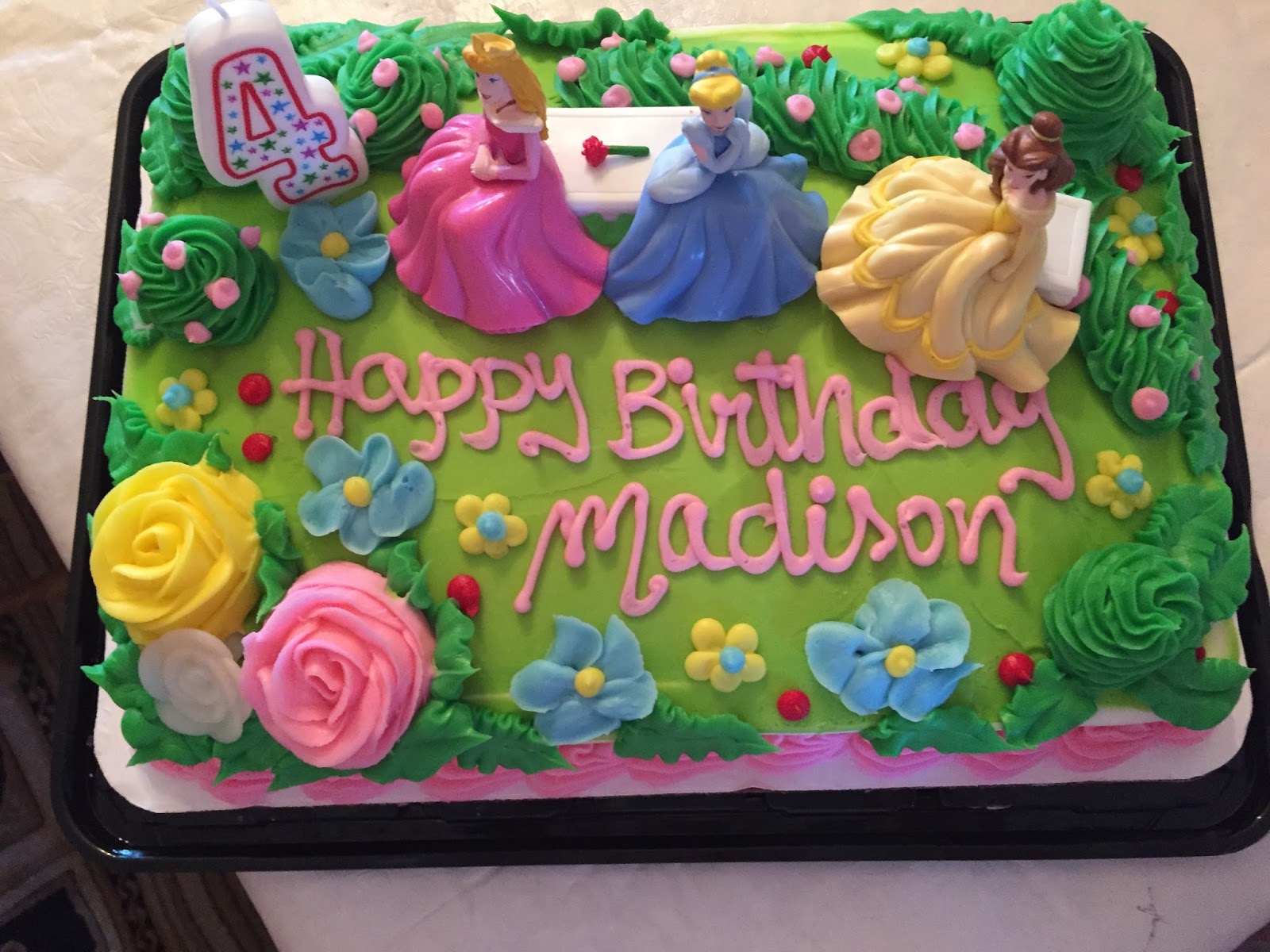 Madison's birthday cake
 Halloween as Sophia the First
Tuesday, June 30, 2015
The Magical World of Disney

Currently I eat, sleep and breathe
Disney Princesses’. If someone entered my daughter’s room they would think that
she was slightly obsessed. Bedspread, stuffed animals, Barbie’s, costumes; she
has it all. Some parents may feel that
the Disney Princess culture sends a message to our daughters of perfection,
reliance on a man or racism. I believe
that it leaves room for conversation. Conversation about what its real and what
is a story. What makes them beautiful, and what makes her beautiful.
Madison’s favorite princesses have no color in
her eyes. Her favorites include Sofia the First (Hispanic) and Tiana (African
American). At four years old she doesn’t give their skin color a second
thought, she finds them beautiful. She loves Tiana so much that she often gets
upset when she is not represented in pictures (be on her bedspread, sippy cups
and posters). She does notice that she is not with the other Princesses. I do believe that the Disney ideals are
somewhat magical. The idea that no matter what, if you wish it, it will come
true is warming to the heart. Disney
evokes the imagination, promotes the ideas of hope, laughter and happiness.

Linda Christensen’s Unlearning
the Myths That Bind Us tore me if two different directions. On one side I
agree that diversity needs to be discussed and represented better in the Disney
franchise. Princesses and characters need to display real world people or all
sizes, shapes and colors.
However, I watch Disney Jr. on a
daily basis and feel that changes have already begun. For example, Doc McStuffins is an African American female
toy doctor, her mother is the breadwinner and her father stays home and takes
care of the kids. Kate and Mim-mim is
a story about a little girl and her imaginary toy stuffed bunny. Her bunny however
represents a gay male.
Christensen purposed the idea of a
black Cinderella on page 194. Where I see the need to add diversity, I don’t
think that we need to re-write classics to push for diversity. I do however
think that stories like Princess and the
Frog are important. They are their own story, and have its own happy
ending.

Disney’s Brave is one of the stories
that I enjoy the most. Maybe its because its about a bond between a mother and
daughter rather then the need for a man to rescue his beloved. Tonight I
watched the movie with my daughter. She didn’t ask the deep questions about body
image or race but rather, “ Why are they trying to kill that bear?” and
“why is she crying?” We talk often about girls can do anything that boys
can, and use Merida as an example. Madison wants to play golf. We don’t discourage
her curiosity, however we support her beginning passion for the highly male dominated sport. She knows she can do anything a boy can do, and boys can do anything girls can.
Monday, June 29, 2015
Boyd vs. Wesch and the Digital Native

Dana Boyd and Mike Wesch both take
interesting directions, regarding the importance of technology in our
classrooms, and the social revolution it is creating. Boyd comments about the
generational gap in regards to technology and why youths are considered as “digital
natives”. There is this idea that all teens understand technology because they “learn
faster” or “grew up with it”, however they also need to be taught to evaluate
information.
On the flip side, Wesch feels that participation,
and collaboration is more important than technology when thinking in terms of engaging
our students. He believes that we need to move from making our students knowledgeable
to knowledge-able, and that by doing so takes knowledge-ability, which is a
result of practice. I agree wholeheartedly that this idea of social-technology
takes social movements and makes them worldwide movements in days. The ALS
ice-bucket challenge last summer is one example of a small movement brought
“alive” by digital technology.
I feel that both of these authors’
views are valid in their own rights. Depending on the climate and culture of
your school depends on if these ideas could be successful. I agree with Welch’s
statement about social revolution. This type of social technology is allowing
us to collaborate through sites like Facebook, and twitter as well as academically
through sites like Wikipedia. I think
that technology is only going to become more and more important for our
students and embracing the change is going to help our students be successful.
Boyd continues to talk about the
idea of "digital wisdom" and teaching our students how to sift
through revelant and appropriate information they find on the web rather than
censoring it. I understood this idea clearly because I am experiencing it in my
own school with censoring things rather then creating “teachable moments”. Wikipedia
was an idea that I had trouble with in the Boyd piece. I was always told that
information from Wikipedia wasn’t a reliable source for information, so in turn
I did the same to my students. Wesch also believed that Wikipedia is a place in
which people can collaborate and learn from one another. I understand and
appreciate the idea of collaboration and learning from each other, however I
still do not think it should be the only means of research for students.
Where do you stand on
the “digital native” terminology?

I think that I stand on the side of Marc Prensky. I think that in some
ways I am a digital immigrant because I have grown up with various different
types of technology. However I do feel that personal interaction is just as
important. I learned people skills by talking to people, todays’ digital
natives sometimes only communicate with a screen in front of them.
I remember life with
out a cellphone and a computer; I still remember how it changed my life when it
first came out and how I can’t live with out them today. When I tell my students what my first cell
phone looked like and that it was a black and green screen, it is unimaginable
to them. However they have experienced this “digital life” since the day they
were born. They are able to figure their way about the school firewall and
bring up anything that I need that is blocked. Sometimes I don’t feel that I am
neither supported nor capable to meet the needs of their capabilities.
In my school there are teachers that still will not allow
students to type papers with the notion that they will “plagiarize”. Prensky
makes the point that our Digital Immigrant teachers, who speak an outdated
language (that of the pre-digital age), are struggling to teach a population
that speaks an entirely new language. Those moments need to be teachable and
not censored. Unfortunately not keeping up with the times teaches our students
nothing about skills that are now needed in the 21st century-
therefore, they lag behind their peers.

Subscribe to:
Posts (Atom)